
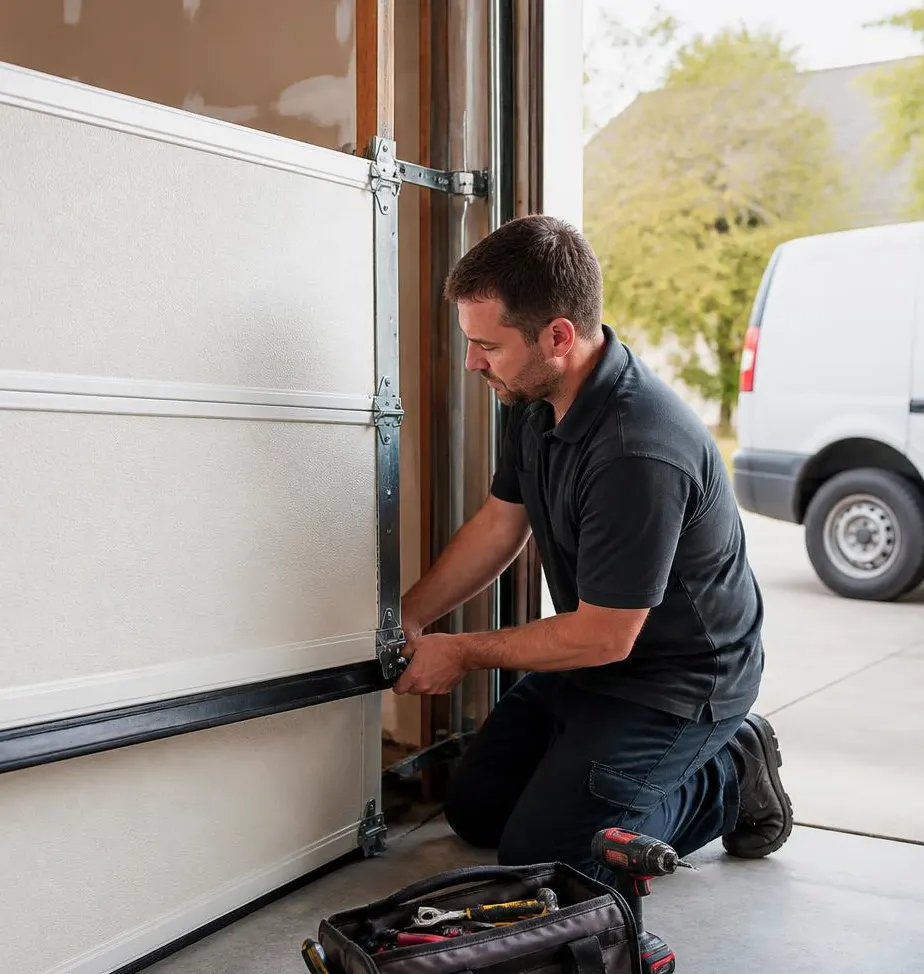
What a Technician Sees on a Typical Call
The call usually starts the same way: "It was fine yesterday, then this morning it just stopped" or worse, "something snapped and the door dropped." When a technician gets out to a home in Julian, Wynola, or up toward Pine Hills and pulls the panel off, the real story is almost never sudden. It's a cable that's been fraying for months, or rollers that have been grinding in their tracks long enough to chew through the metal. The loud failure is just the last five minutes of a slow problem.
Cables: The Part Holding All the Weight
Garage door cables run from the bottom bracket up to the drum near the springs, and they're under constant tension whenever the door is closed. A standard double-car door can weigh well over 100 pounds, and the cables (along with the springs) are doing all the work of controlling that weight as it goes up and down.
Cables don't fail cleanly. They fray strand by strand, usually where they wrap around the drum or rub against the bottom bracket. Signs to look for:
- Visible frayed strands, kinks, or rust on the cable
- One side of the door looking slightly lower than the other
- A door that seems to shimmy or tilt as it moves
- Popping or snapping sounds during operation
When a cable finally lets go, it usually happens with the spring still under tension, which is exactly why this isn't a DIY fix. A broken cable with a loaded spring can whip hard enough to cause real injury, and it often takes the door off-balance in a way that stresses the opener too.
Rollers: The Part Nobody Thinks About Until They Fail
Rollers are the unglamorous workhorses riding in your tracks every time the door opens and closes. Most homes still have the stamped-steel or hard plastic rollers that come standard, and they wear out faster than people expect, especially with the dust that blows through this area during the dry months.
Worn rollers show up as:
- A grinding or rumbling noise instead of a smooth roll
- Visible wobble or wear flats on the roller wheel
- The door jerking or hesitating at certain points in the track
- Dust and grit buildup inside the track itself
Here's the part that causes arguments: a noisy roller feels like a minor annoyance, easy to live with for another season. But a roller that's worn down or coming apart can jump the track, and when it does, it puts sudden sideways stress on the cable right next to it. That's often the actual trigger that turns a slowly fraying cable into a snapped one. The two problems aren't separate; they feed each other.
Why the Dry Season Here Makes This Worse
The dust and occasional wildfire smoke that settle in during dry stretches work their way into track hardware more than most homeowners realize. Grit acts like sandpaper on rollers and bearings, speeding up wear that would otherwise take years. Then when winter rain arrives, any rust that's started on cables or exposed hardware accelerates. A door that's been quietly collecting dust all summer often starts showing its real condition once the weather turns damp and temperatures swing between cold mornings and warmer afternoons, which is common in the mountain communities around here.
If your garage door hasn't been looked at since last winter, the transition into the rainy season is a reasonable time to have it checked, before moisture turns minor wear into a bigger repair.
The Honest Trade-Off
Replacing a frayed cable or a set of worn rollers on their own is a modest repair. Letting it go until the cable snaps or the door jumps the track usually means a bigger job: a damaged track, a bent panel from an uneven drop, or an opener motor that's been straining against a door it can no longer lift evenly. The noise and the slight unevenness are the cheap warning. The quiet is what costs more later.
When to Call Julian Garage Door
If you're hearing grinding, popping, or seeing visible fraying on the cables, that's a call, not a wait-and-see. Our technicians inspect the cables, rollers, tracks, and spring tension together, because they rarely fail in isolation. Depending on what we find, that might mean a straightforward Garage Door Repair to replace worn rollers and cables, or if the springs are also showing their age, a Spring Replacement done as a matched set so the door stays balanced. Either way, it's a controlled fix instead of an emergency one.
If your door is already stuck, off-track, or won't move at all, that's what our Emergency Garage Door Service is for.
Call Julian Garage Door for an inspection before the noisy part becomes the broken part, serving homes throughout Julian, CA and the surrounding mountain communities.